
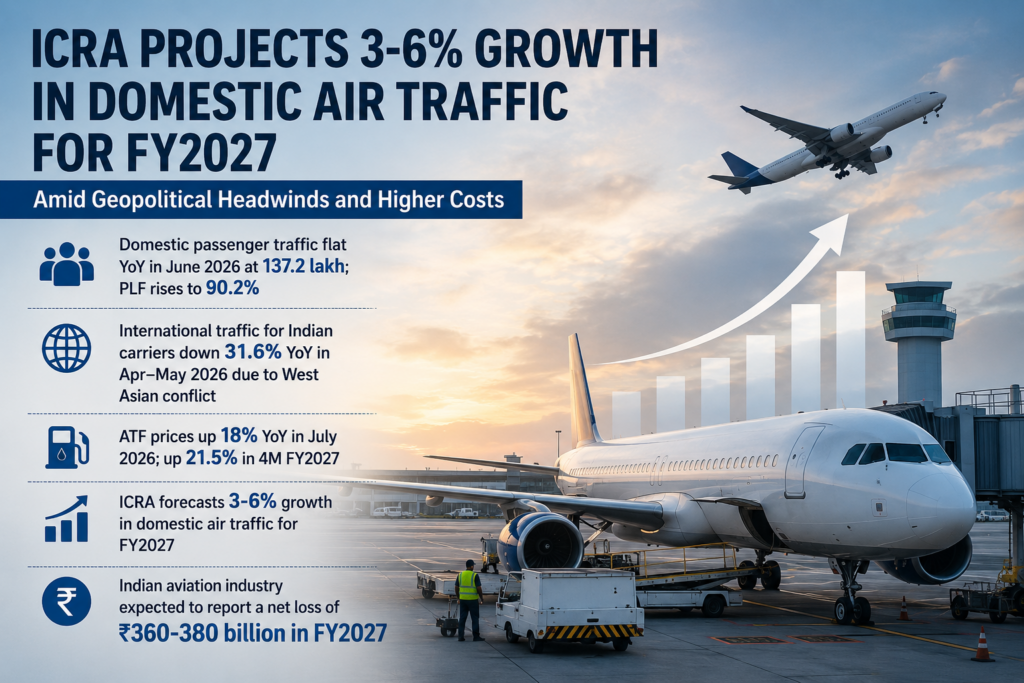
India’s domestic aviation sector is expected to witness modest growth in FY2027 as geopolitical tensions, elevated fuel prices and rising operating costs continue to weigh on airline profitability, according to ICRA’s latest monthly report on the Indian aviation sector.
The ratings agency has projected domestic air passenger traffic to grow by 3-6 per cent during FY2027. However, it expects the Indian aviation industry to post a net loss of Rs 360-380 billion during the fiscal, primarily due to the prolonged impact of the West Asian conflict, which has adversely affected passenger demand, the rupee and aviation turbine fuel (ATF) prices. The financial burden is also expected to increase with higher aircraft lease rentals as airlines continue to induct new aircraft into their fleets.
ICRA noted that the financial stress on smaller airlines is likely to be partly eased through access to the Emergency Credit Line Guarantee Scheme (ECLGS) 5.0, while larger carriers remain relatively well positioned because of healthy cash reserves or the backing of financially strong parent companies.
Domestic passenger traffic remained largely unchanged in June 2026, reflecting a cautious demand environment. Indian airlines carried an estimated 137.2 lakh passengers during the month, registering a marginal year-on-year growth of 0.9 per cent over 136 lakh passengers in June 2025. On a sequential basis, however, traffic declined by 10.8 per cent from 153.9 lakh passengers recorded in May 2026.
For the first quarter of FY2027 (April-June 2026), domestic passenger traffic is estimated at 429.3 lakh, representing a year-on-year growth of 2.3 per cent.
International operations, however, faced a much sharper slowdown. Passenger traffic carried by Indian airlines on international routes declined by 31.6 per cent during the first two months of FY2027 (April-May 2026), with ICRA attributing the fall primarily to disruptions caused by the ongoing West Asian conflict.
Despite subdued passenger demand, airlines recorded a significant improvement in passenger load factors (PLF) during June. Capacity deployment was reduced by 5.5 per cent compared with June 2025 and by 12.3 per cent from May 2026, largely due to operational disruptions. This lower capacity helped domestic carriers achieve an estimated PLF of 90.2 per cent in June, compared with 84.5 per cent a year earlier and 85.9 per cent in the previous month.
Fuel costs continue to remain a major concern for the industry. ATF prices announced on July 1, 2026, remained unchanged from the previous month but were 18 per cent higher than a year earlier. During the first four months of FY2027, average ATF prices increased by 21.5 per cent year-on-year.
ICRA observed that although average ATF prices during FY2026 were 4.1 per cent lower than FY2025 due to softer crude oil prices for most of the year, the outbreak of conflict in West Asia reversed the trend, pushing fuel prices higher. Crude oil prices corrected sharply from mid-June 2026 amid expectations of a peace agreement and improving market sentiment. However, the agency cautioned that the renewed escalation of hostilities in the region during mid-July remains a key risk that could once again trigger volatility in crude oil and ATF prices.
While calibrated government intervention in ATF pricing is expected to provide some relief, ICRA believes the combined impact of geopolitical uncertainty, higher fuel costs, currency depreciation and rising lease expenses will continue to challenge airline profitability, even as passenger traffic gradually recovers over the remainder of FY2027.