
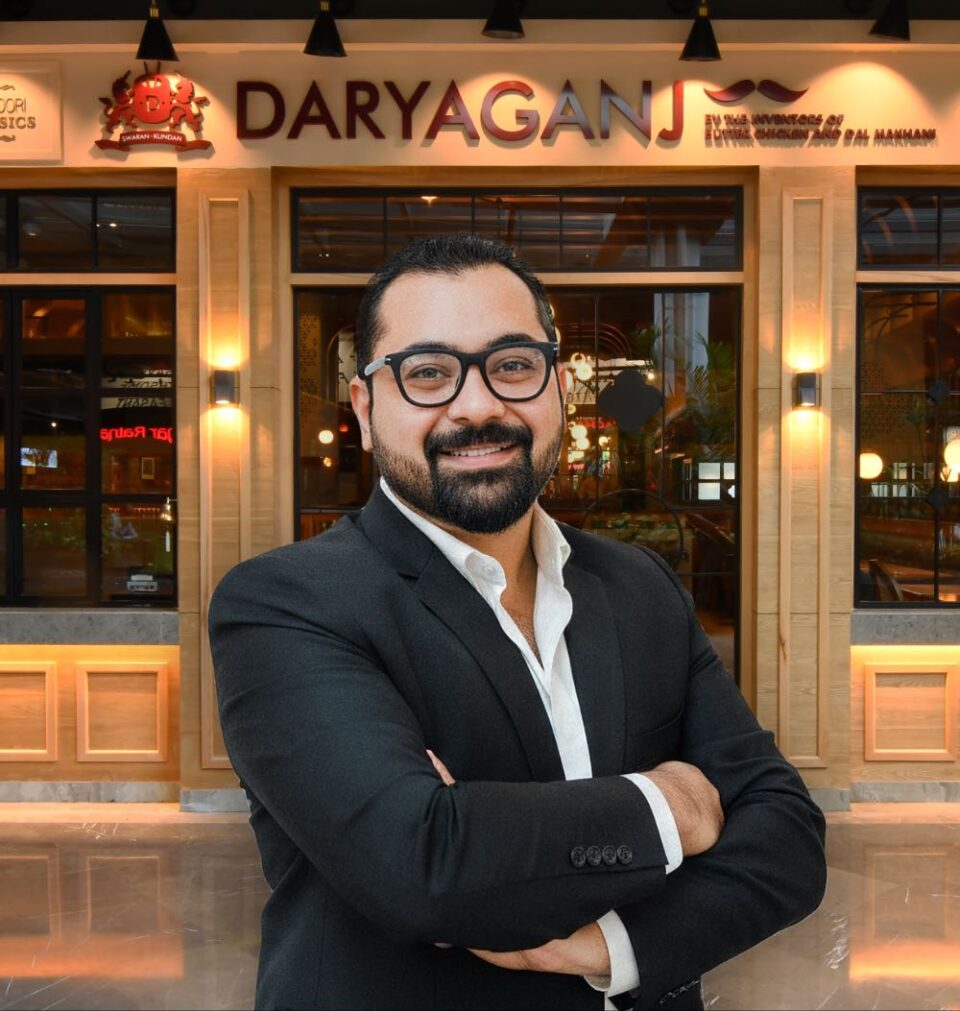
At a time when India’s dining landscape is increasingly driven by novelty and fusion, Daryaganj has chosen a different path, one rooted in legacy, authenticity and storytelling.
In an exclusive conversation, Co-founder & CEO Amit Bagga reflects on the brand’s journey from reviving pre-Independence recipes to building a Rs. 100 crore plus enterprise and why classic North Indian cuisine is not just surviving but thriving.
“This isn’t just a restaurant; it is a legacy brought back to life”. For Bagga, the idea behind Daryaganj was never just about opening another restaurant, it was about reclaiming a story that had been lost over time.
He traces the origins back to the 1930s, when his co-founder Raghav Jaggi’s grandfather, the legendary Kundan Lal Jaggi, worked in Peshawar before migrating to Delhi during Partition. In 1947, he co-founded a restaurant in Daryaganj, where two of India’s most iconic dishes, Butter Chicken and Dal Makhani were born.
“After the family exited the restaurant business in the 1990s, that direct connection to the legacy was lost,” Bagga shares. “Years later, I told Raghav, the world needs to know what your grandfather created. That’s where the idea of Daryaganj began.”
The duo finally launched their first outlet in 2019, bringing back the original recipes in a contemporary format. “We were not just opening a restaurant, we were reviving history.”
Betting on classics in a world chasing trends
When Daryaganj launched, the industry sentiment was clear; north Indian cuisine was seen as “dated” and losing relevance. “Everyone told us not to do it,” Bagga recalls. “They said it is a declining segment. But I believed the problem was not the cuisine, it was how it was being presented.”
Instead of chasing fusion, Daryaganj focused on elevating the classics through storytelling, design, and a deeply curated dining experience. From interiors and music to plating and service, every detail was built around what Bagga calls “five-senses dining.”
“Your competition should not be others, it should be your own benchmarks,” he says. “If you do something with conviction, the market will respond.” The response has been emphatic. With over 2.6 million guests served and a 59% repeat rate, the brand has not only scaled rapidly but also built strong customer loyalty.
Scaling with consistency: “Authenticity is non-negotiable”
As Daryaganj expanded to 15 outlets, maintaining consistency across locations became critical especially for legacy recipes. “We have very strong SOPs, daily tasting protocols, and real-time customer feedback tracking,” Bagga explains. “We use tech platforms to analyse hundreds of reviews daily and identify trends instantly.”
Ingredients are standardised rigorously, and the focus remains on delivering the same taste across every plate. “You can’t compromise on the soul of the dish,” he adds. Interestingly, the brand has also consciously limited its menu. “Any great restaurant in the world has fewer dishes. That’s how you maintain quality and reduce complexity.”
Innovation within tradition
While rooted in legacy, Daryaganj has consistently innovated, especially during challenging times like the pandemic. When dine-in shut down, the team introduced the “5 Senses Box”, recreating the restaurant experience at home through curated packaging, signature fragrances, and even music accessed via QR code.
“It was about asking, how do we take the essence of our dining experience to people’s homes?” Bagga says. From packaging innovations to unique menu additions like Daryaganj Tazgi, the brand continues to evolve without diluting its core.
Global ambitions, local soul
Daryaganj’s first international step came with the launch of Daryaganj GOLD in Bangkok – a premium format tailored for global audiences. “Thailand felt like the right starting point, close to India with a strong Indian diaspora and tourist base,” Bagga explains.
However, the transition was not without challenges. “We had to rework ingredients, experiment for months, and even import certain elements to match the original taste.”
The effort paid off. Even in a challenging market, the Bangkok outlet has performed strongly, reinforcing the brand’s global potential. With plans for expansion across the UK, GCC, and Southeast Asia, Daryaganj is positioning itself as a global ambassador of North Indian cuisine.
Growth with purpose
Despite crossing Rs.100 crore in ARR and securing institutional investment from Anicut Capital, Bagga is clear that growth will remain measured. “We are not chasing aggressive expansion right now. This is the time to strengthen processes, governance, and the backbone of the business.”
Beyond business metrics, the brand is also focused on sustainability using recyclable packaging, responsibly sourced ingredients, and minimising waste. Community initiatives, such as hosting underprivileged children at their restaurants, are equally integral.
“One child told us it was the best day of his life. That stays with you,” Bagga reflects. As the conversation turns to the future, Bagga’s perspective remains deeply rooted in legacy.
“Even in 2047, Butter Chicken and Dal Makhani will still be relevant,” he says with conviction. “These are comfort foods of India, the soul of our cuisine.”
For Daryaganj, the vision is not just about scale but about staying timeless.
“We built this brand with a 30-year horizon in mind. Trends will come and go but authenticity, if done right, will always endure.” In an industry often driven by reinvention, Daryaganj’s success lies in rediscovery of flavours, of history and of the enduring power of doing the basics exceptionally well.