
Every year from November to March, the Rann of Kutch in Gujarat transforms into a vibrant showcase of the state’s rich cultural heritage. During this period, the vast stretches of the iconic white desert welcome thousands of travellers as the Rann Utsav brings the region’s traditions, music, art and flavours to life.
Yet, the Rann of Kutch offers far more than the spectacle of the white desert or the festivities of Rann Utsav. That deeper and soul awakening side of Kutch is what I discovered during my recent visit to this celebrated region as I explore the UNESCO World Heritage Site of Dholavira and Road to Heaven, the latter now a cynosure of social media.
My journey began with a flight from Delhi to Ahmedabad followed by a connecting flight to Bhuj, the nearest airport to the Kutch district. For the uninitiated, Dhordo is the venue of the Rann Utsav, located about a two-hour taxi ride from Bhuj Airport. The drive to Dhordo unfolds across vast stretches of barren land occasionally broken by pockets of greenery, offering a glimpse into the region’s varied terrain. Arriving at the Tent City feels like stepping into a fully formed township that has risen unexpectedly from the emptiness around it. The atmosphere is lively with guests mingling amid vibrant cultural performances throughout the festival.
The Scenic Road
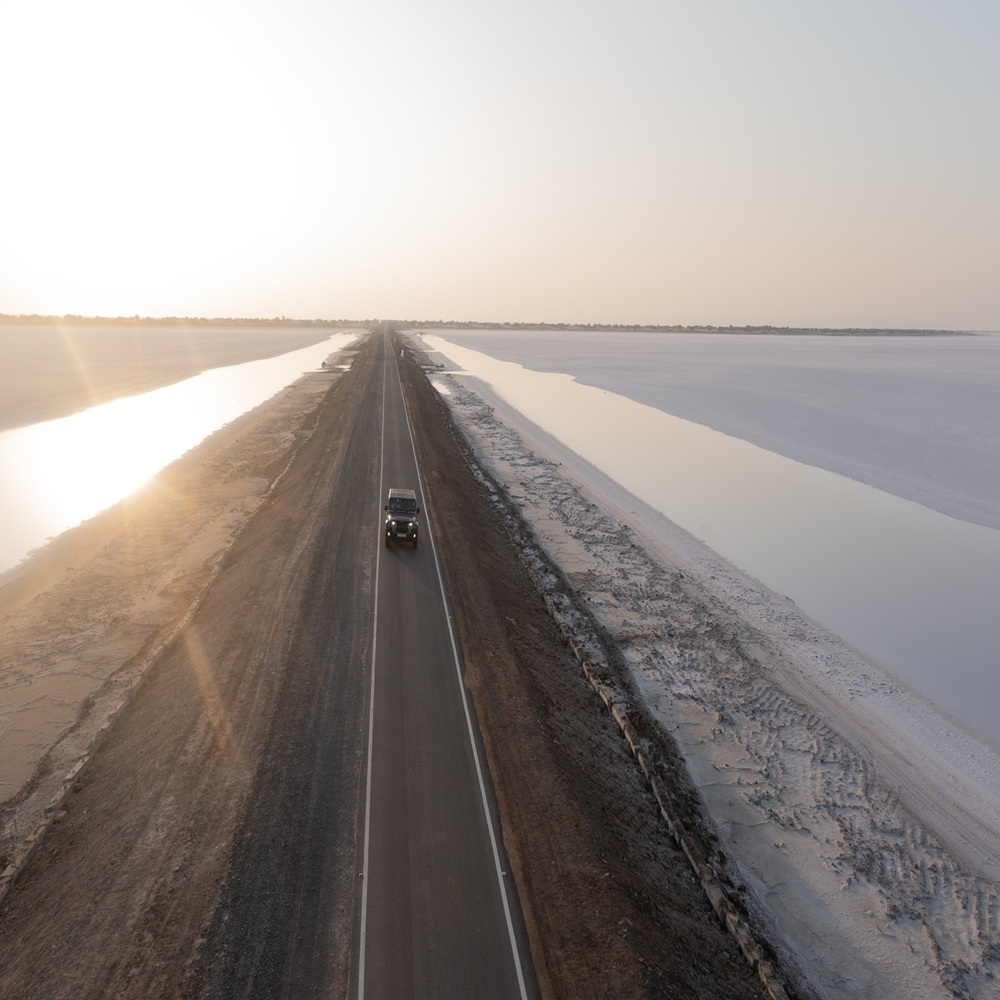
Soon, I set out to explore the ancient ruins of Dholavira, a remarkable window into the Indus Valley Civilization that thrived here more than 4,500 years ago. En route, I drove along what is now popularly known as the “Road to Heaven”, a stretch that has rapidly gained attention on social media for its breathtaking visuals. Extending nearly 30 kilometres along the Khavda-Dholavira highway, the road cuts through the backwaters of the Arabian Sea. On either side, calm blue waters stretch endlessly, merging with the vast sky at the horizon. At times, it feels as though the road is floating on water creating an illusion of driving through the sea itself. The silence here is striking, broken only by the wind and the occasional passing vehicle. No surprise that today this road has become a hot favourite of both photographers and road-trip enthusiasts.
Where Kutch Reveals its Ancient Soul
It took me a little more than 2 hours to reach Dholavira from Dhordo. I was excited for my tryst with one of the world’s ancient civilizations. Visiting Dholavira is like going back in time and revisiting a golden era which shaped the future of humanity. Upon arriving at Dholavira, the first thing that struck me was the sheer scale of the site. Spread over 120 acres of land, it is one of the largest and most prominent archaeological sites in India, reflecting the grandeur of the Indus Valley Civilization. The well-defined layout of the city, divided into the Citadel, the Middle Town and the Lower Town immediately highlighted the advanced urban planning and architectural skills of its inhabitants.
During my discovery of the ruins of Dholavira, I came across what would have been a sophisticated water conservation system with its reservoirs and channels, showcasing an unparalleled understanding of water management in an arid landscape. I was particularly impressed by the presence of a large, central water reservoir, surrounded by steps.
One of the most intriguing discoveries at Dholavira is a signboard featuring the Indus script which suggests the presence of an early form of communication and potentially governance. This enigmatic script continues to be a mystery, leaving scholars guessing about its meaning. The complex of the architectural site also includes a museum where visitors can enhance their knowledge about the Indus Valley Civilization.
Dholavira is one of the largest and most significant Harappan cities and what better way to experience its legacy than by staying close to this extraordinary archaeological site. The two-storey, L-shaped Evoke Dholavira Resort offers cottage-style accommodation that draws heavily from Indus Valley influences. From its design elements to its thoughtfully themed restaurant, Indus, the property features terracotta vessels, brass anthropomorphic pots and figurines that echo the artistic heritage of the ancient civilisation.
As I left Dholavira and began the journey back across Kutch’s vast landscapes, it was clear that this region offers far more than a seasonal festival or a photogenic salt desert. Kutch is a place where history, nature and culture coexist in quiet harmony, revealing themselves slowly to those willing to look beyond the obvious. From the timeless engineering brilliance of Dholavira to the surreal beauty of the Road to Heaven, the experience felt both grounding and transformative. The Rann of Kutch in her rustic beauty and layered heritage is not merely a destination to be visited but a story to be told.