
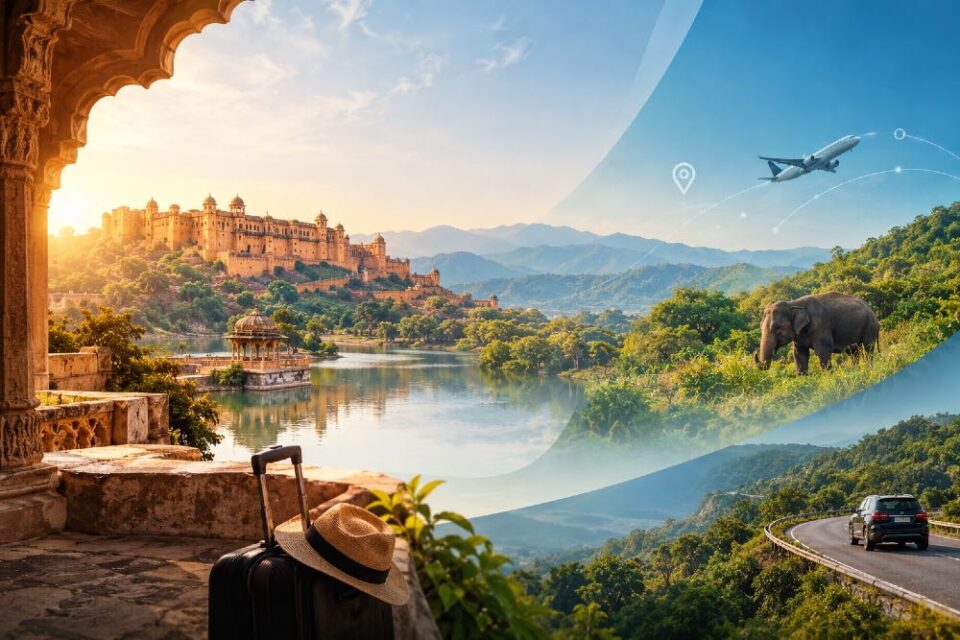
When the world marks World Tourism Day on 27 September, the conversation usually turns to how many people are travelling. This year’s theme, “Digital Agenda and Artificial Intelligence to Redesign Tourism,” invites a different question: what does travel leave behind for destinations, communities and the traveller? Six leaders from across India’s hospitality and mobility landscape offer their answers, from stewardship of heritage properties and wildlife habitats, to hotels that sit closer to the destinations travellers actually want, to AI-led personalisation and dependable ground transport. Their views differ in emphasis but share a common thread: the next phase of Indian tourism will be built on authenticity, responsibility and a strong sense of place.
“On World Tourism Day, we are reminded that every property in our portfolio carries a living story—from historic forts and havelis that anchored communities, to boutique retreats, nature lodges, and wildlife sanctuaries dedicated to preserving fragile ecosystems. At WelcomHeritage, our role across our collection of heritage, nature, and wildlife retreats goes beyond hospitality; it is one of active stewardship.
In a country as culturally and naturally rich as India, responsible tourism is the catalyst that breathes new life into historic structures, creates sustainable livelihoods, and protects vital natural habitats. Across all our properties, we remain committed to ensuring these spaces remain vibrant and cared for—delivering authentic experiences for today’s travellers while safeguarding India’s heritage and environment for generations to come.“
– Abhishek Bhattacharya, Sales, WelcomHeritage Hotels
“World Tourism Day is a good moment to ask a simple question: how many of India’s actual destinations does most of our hospitality infrastructure really serve? For years, quality stays have clustered around a handful of metros, while some of the country’s richest travel experiences — spiritual, heritage, adventure and nature — have remained underserved. We believe the next phase of Indian hospitality has to go beyond the traditional hotel markets and move closer to the destinations and experiences travellers are actually seeking. Whether it’s Rishikesh for the traveller chasing the Ganga and the rush of a river rapid, Ujjain and Indore for the spiritual and heritage circuit of Madhya Pradesh, or Gurgaon as a gateway to the lesser-known experiences spread across the Aravalis, we want our network to put a dependable stay closer to where the journey actually leads. Our hotels in Gurgaon, for instance, are not only designed for corporate and social travellers, but also for people looking to discover the trails, heritage sites, lakes, villages and other hidden gems that sit within and around the Aravalis, often just a short drive away.
We also think about the same traveller differently through the week. A corporate guest in Delhi or Indore on a Tuesday can just as easily be a weekend leisure traveller in Rishikesh or Ujjain by Saturday, and our properties are built to serve both occasions without compromise. As this year’s global theme reminds us, technology has a real role to play here too — from how a traveller discovers a destination to how seamlessly they can book and experience their stay. For us, that isn’t a separate innovation story. It is the infrastructure that can support India’s next wave of tourism — connecting business and leisure, metros and lesser-known destinations, convenience and discovery, through one dependable network.”
– Gaurav Gupta, Co-founder, Saltstayz
“This World Tourism Day, we’re reminded that Corbett doesn’t just draw travellers for a safari drive; it asks something more of us: to protect the wilderness we’re inviting people into. At The Golden Tusk, every experience we design, from our villas to the conversations we have with guests, carries that responsibility. We’ve seen firsthand how a well-informed traveller becomes a quiet advocate for the forest long after they’ve left, and that’s the real dividend of tourism done right. Every destination needs more people who leave caring about what they saw. Tourism here isn’t separate from conservation.”
– Anirudh Lakhotia, Director, Ivory Destinations (The Golden Tusk and The Chamomile Estate)
“India’s tourism journey has the potential to evolve and redesign itself with the integration of AI, right from how travellers discover destinations to personalised itineraries. Having an integrated approach presents an opportunity to streamline the hospitality sector, not to standardise travel experiences but to help tourists discover and access distinctive experiences. India’s strongest advantage is in its culture, communities, and sense of place that cannot be replicated without human touch. From finding suitable destinations with personalised itineraries to reducing food waste and energy consumption, AI can improve operational efficiency while allowing hospitality teams to devote greater attention to personalised service and enhancing their guests’ experiences.”
– Marloes Knippenberg, CEO, Kerten Hospitality
Tourism today stands at an important inflection point. It is no longer defined simply by the number of people travelling, but by the value that travel creates for destinations, communities, businesses and the traveller. India has tremendous potential in this space, with its diversity of culture, heritage, cuisine, landscapes and increasingly sophisticated hospitality ecosystem.
The traveller is also evolving. There is a growing preference for experiences that feel authentic, locally rooted and meaningful, rather than simply checking destinations off a list. This presents a significant opportunity for the Indian tourism and hospitality industry to build destinations and experiences that encourage longer stays, deeper engagement and greater local participation.
The next phase of tourism growth must therefore be about creating stronger tourism ecosystems, where hospitality, local enterprises, culture, food, entertainment and communities come together to create a distinctive sense of place. Responsible development will be equally important, ensuring that the economic benefits of tourism are shared while the character and resources of destinations are protected. India has the scale and diversity to become one of the world’s most compelling tourism markets; the focus now should be on building experiences and infrastructure that can sustain that growth over the long term. World Tourism Day is ultimately a reminder that tourism is not just an industry of movement. It is an industry of connection, opportunity and destination building.
– Vijay Prabhu, Founder, Little Earth Group
“The theme for World Tourism Day 2026, ‘Digital Agenda and Artificial Intelligence to Redesign Tourism’, reflects a shift already reshaping ground transportation in India. Travellers now expect the road leg of their journey to match the reliability of their flight or hotel booking. Consider an international visitor touring the Golden Triangle of Delhi, Agra and Jaipur. Their experience of India depends heavily on punctual transfers and chauffeurs who understand both the route and the guest. At Avis India, we are investing in digital booking and real-time fleet visibility to deliver that consistency across every city we serve. Technology strengthens our operations, while our trained chauffeurs and service teams remain central to the guest experience. As India builds its standing as a global destination, organised and dependable mobility will shape how visitors experience the country, and we are committed to contributing to that progress.”
– Aman Naagar, MD, Avis India
Read together, the six perspectives point in the same direction. Whether it is a fort restored as a stay, a forest protected because travellers care about it, a hotel placed closer to the destination a guest actually wants to reach, or a chauffeur-driven transfer that arrives on time, technology and scale matter most when they serve people and places. As India’s tourism economy grows, the voices here suggest that the industry’s measure of success will be less about arrivals and more about connection, shared benefit and the character of the destinations it welcomes.